
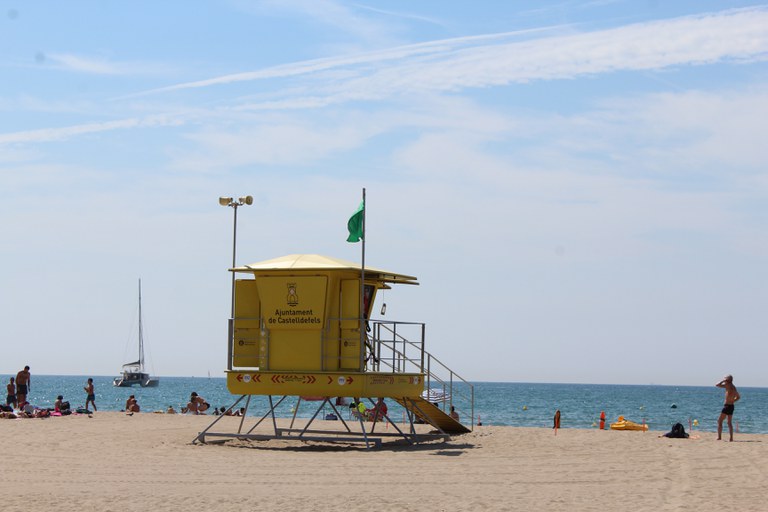
Accident prevention, surveillance, rescue and first aid for beach users.
Beach flags:
- When the sea is calm with no apparent danger or risk to people.
- When the water quality is good, as well as the overall condition of the beach.
- When no risk situations are detected for beach users.
- When waves may cause difficulties for swimmers, reaching up to one and a half metres in height.
- When moderate currents are present.
- When storms or weather conditions hinder safe surveillance by the lifeguard service.
- When there is dirt or stains in the water.
- When the sand is in poor condition.
- When jellyfish or other harmful marine animals are present.
- When other situations arise that pose a moderate risk to beach users.
- When waves pose a serious danger to people, reaching two metres or more in height.
- When strong or very strong currents may pull swimmers out to sea.
- When overall sea conditions are very rough.
- When very adverse and dangerous weather conditions occur.
- When the water or sand is contaminated.
- When there is a significant presence of harmful and/or dangerous marine animals.
- When other situations arise that pose a serious risk to beach users.
It is very important to pay attention to the colour of the flags, which indicate swimming conditions, and to follow the recommendations of the lifeguard service staff and the public address system installed along the entire beach.
Company awarded the Rescue and Lifeguard Service on Castelldefels beach: Pro-activa Serveis Aquàtics SL
Collaboration of the Barcelona Provincial Council
📲 The new Pro-Activa mobile app is now available, where you can check the flags and beach conditions, as well as book an amphibious wheelchair for accessible bathing.
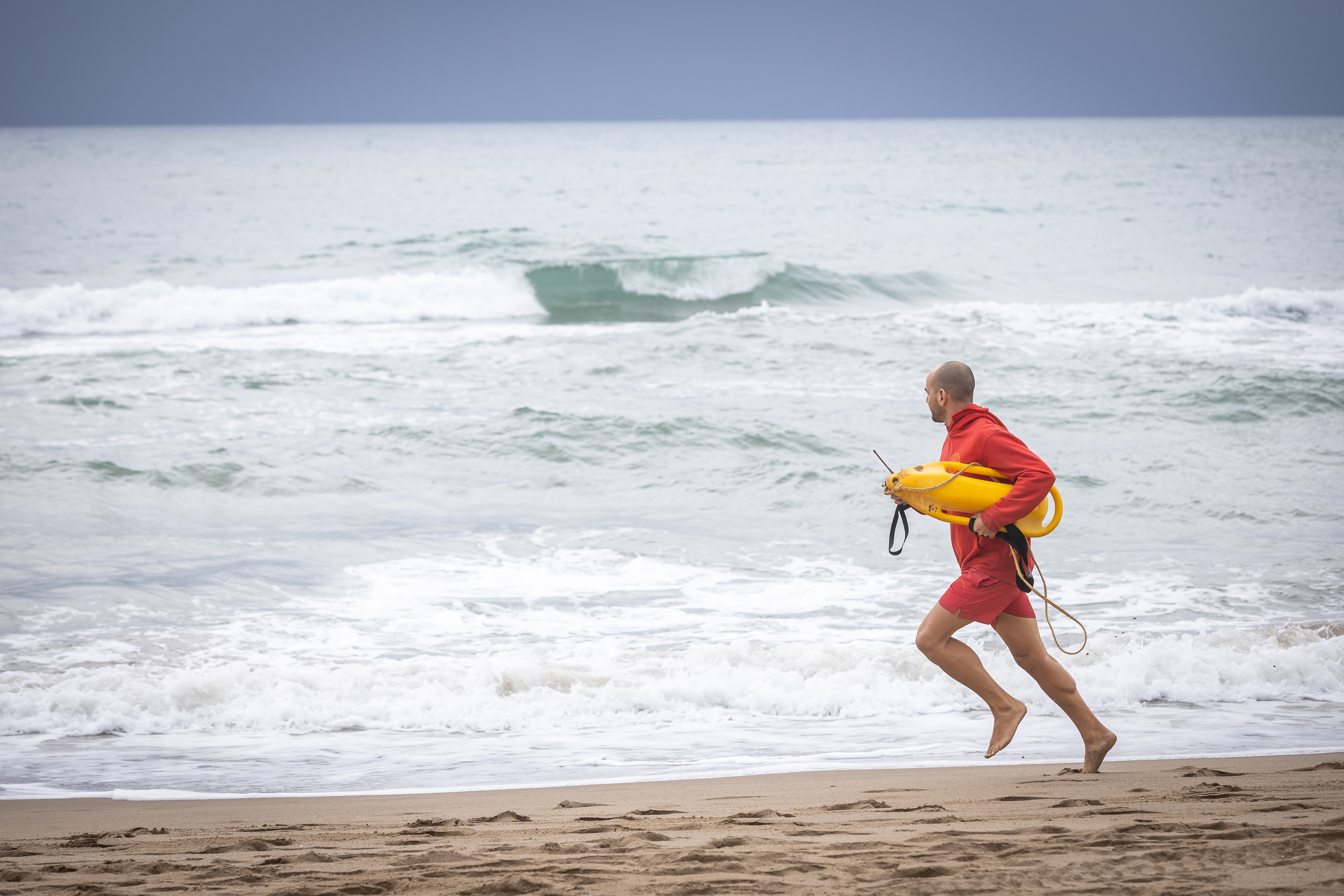

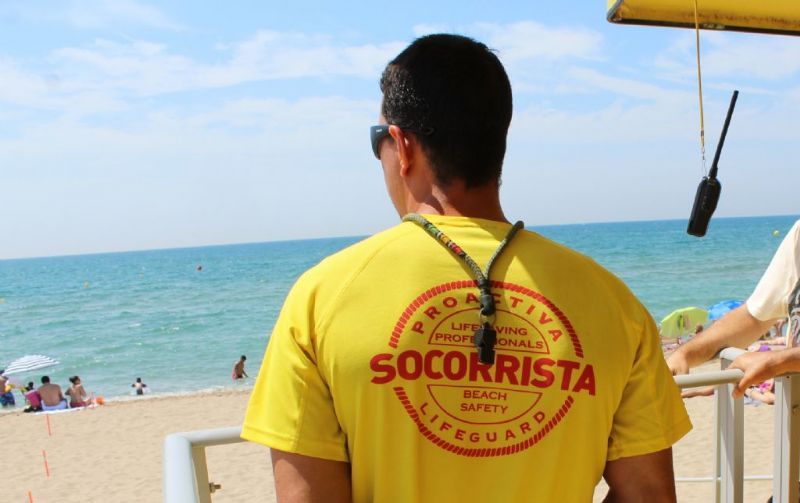
Rescue and First Aid Schedule:
From 1 June to 6 September |
|
Everyday |
10 am – 7 pm |
From 7 to 27 September |
|
Monday to Friday |
11 am – 6 pm |
Saturdays, Sundays and Public Holidays |
10 am – 7 pm |
📍5 TAV (Advanced surveillance towers) located at:
- To the left of the CF02 entrance (between Uruguay Street and Colombia Street)
- Av. República Argentina (entrance 08)
- Av. dels Baños (entrance 19)
- Plaça de les Palmeres (entrance 32)
- C. 22 (entrance 39)
1 PAV unit (Advanced Surveillance Point) located very close to the shoreline.
And 6 lifeguard chairs along the entire beach, located very close to the shoreline:
- To the left of access 04 (left of Xiringuito IGUANA, between Mexico Street and Pas Elevat)
- Between access 10 and 11 (in line with Carrer 517)
- Between access 16 (Estrella de Mar Street) and access CF17 (Masteler Street)
- Between access 22 (6th Street) and access 23 (7th Street), in line with Street 504
- To the left of access 29 (left of Xiringuito Playeros, between 13th Street and 13bis Street)
- To the right of access 36 (19th Street)
Recommendations:
Please follow these swimming rules and always comply with the guidance provided by lifeguards and local authorities.
- Watch children at all times. If they cannot swim, make sure they wear an age‑appropriate device that keeps their head above water. Ensure a responsible adult is always supervising them while they swim or play near the water.
- Do not overestimate your swimming abilities: be aware of potential dangers.
- If you cannot swim well, stay in shallow areas where the water does not go above your waist, and do not move away from the shore.
- If you find it difficult to leave the water due to currents, swim out diagonally.
- If swimming in open water, swim parallel to the coastline to avoid drifting too far from the bathing area.
- On windy days, avoid using inflatable mattresses or floats, as the current may pull them away easily.
- In case of a storm, always leave the water immediately.
- Respect the areas marked by buoys for water sports, as surfboards, jet skis and other equipment may pose a risk.
- Do not swim if you feel unwell or overly tired.
- If you are in the water and start feeling unwell or notice unusual symptoms, exit the water immediately.
- Do not enter the water abruptly. Wet your arms and legs first, and enter slowly. Avoid swimming if you have not completed digestion.
- Avoid staying in the water for too long or submerging yourself for extended periods.
If you see someone struggling in the water, notify the lifeguard immediately or call 112. Do not attempt a rescue unless you are trained in aquatic rescue.
Always follow the regulations of each sport and comply with all safety rules. Practise water sports only in the designated areas and be mindful of other users.
- If practising water sports such as water skiing, sailing, windsurfing, canoeing or jet skiing, use the designated entry and exit channels from the base area. Do not enter the bathing zone and always stay outside the buoyed area.
- Never practise water sports alone. Inform family or friends of your destination and expected return time.
- Check the weather forecast before going out. Coastal winds and sea conditions can change suddenly. Avoid going out at dusk, as it will be harder for rescue teams to find you in the dark if needed.
- Wear bright-coloured clothing for better visibility, and always wear a life jacket.
- If you go fishing, avoid dangerous areas, as sudden changes in sea conditions may pull you offshore.
- If you practise diving, always carry a knife and mark your position with a buoy. Do not stray far from your boat.
- Never swim against the current: wait until it weakens and let it carry you while moving away from breaking waves.
- Avoid staying in the sun for too long. Use umbrellas, hats, T‑shirts and certified sunglasses for protection.
- It is recommended to start sun exposure gradually and avoid long periods during peak hours, from 11 am to 4 pm.
- Always apply a high SPF sunscreen (above SPF 20), especially if you have sensitive skin. Apply generously, some time before exposure, and reapply after swimming or heavy sweating.
- Ensure children and the elderly stay hydrated. Babies under 6 months must stay in the shade and wear protective clothing.
- To avoid dehydration, drink plenty of water and limit alcoholic beverages.
- At the beach, water and sand reflect sunlight, increasing UV exposure.